1 N Main Street, Suite A, Algonquin, IL 60102


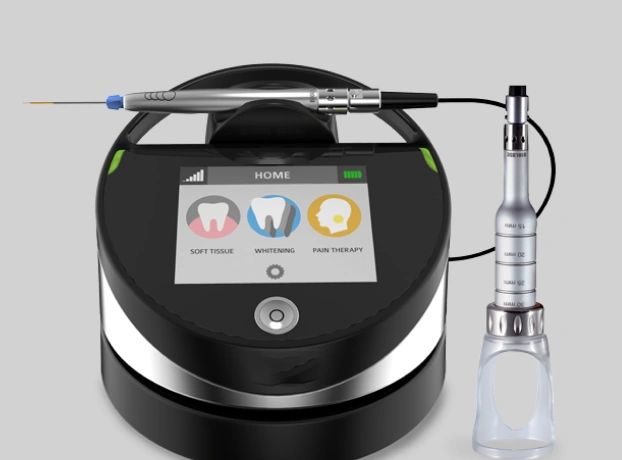
Precise & Minimally Invasive Soft Tissue Laser Dentistry
Advancements in dental technology have transformed how soft tissue procedures are performed. At Root Dental, we use soft tissue laser dentistry in Algonquin, IL to provide precise, minimally invasive treatment for gum and oral soft tissue conditions.
Laser technology allows dentists to perform procedures with greater accuracy while reducing discomfort, bleeding, and recovery time compared to traditional methods.
How Soft Tissue Lasers Work
Soft tissue lasers use focused light energy to gently reshape or treat gum tissue. The laser targets specific areas while preserving surrounding tissue, allowing for controlled and precise treatment.
Because the laser seals blood vessels as it works, many procedures involve minimal bleeding and swelling. This makes laser dentistry an effective option for patients who may feel anxious about traditional surgical instruments.
What Soft Tissue Lasers Treat
Soft tissue lasers are used in a variety of dental procedures involving the gums and other soft tissues of the mouth.
They may be used for:
- Treating gum inflammation and infection
- Reshaping uneven gumlines
- Removing excess tissue
- Managing periodontal concerns
- Reducing bacteria in infected areas
- Improving healing after treatment
This versatility allows dentists to address both functional and aesthetic concerns with precision.

Advantages of Laser-Assisted Dentistry
Soft tissue laser technology offers several benefits that enhance both treatment efficiency and patient comfort.
Benefits include:
- Increased precision during procedures
- Reduced bleeding and swelling
- Minimal discomfort during treatment
- Faster healing time
- Lower risk of infection
- Reduced need for sutures
These advantages make laser dentistry a valuable addition to modern clinical care.
Role in Modern Dental Care
Laser technology plays an important role in contemporary dentistry by supporting conservative, tissue-preserving treatment approaches. The precision of soft tissue lasers allows dentists to perform procedures with improved control and predictable outcomes.
By incorporating advanced tools like soft tissue lasers, dental professionals can diagnose and treat oral conditions more efficiently while maintaining patient comfort and safety.
Schedule an Appointment Today